
Pigmentations and dyschromias are common skin color alterations that may be related to the sun, hormonal factors, inflammation, acne, or photoaging. Proper diagnosis is necessary prior to any treatment.
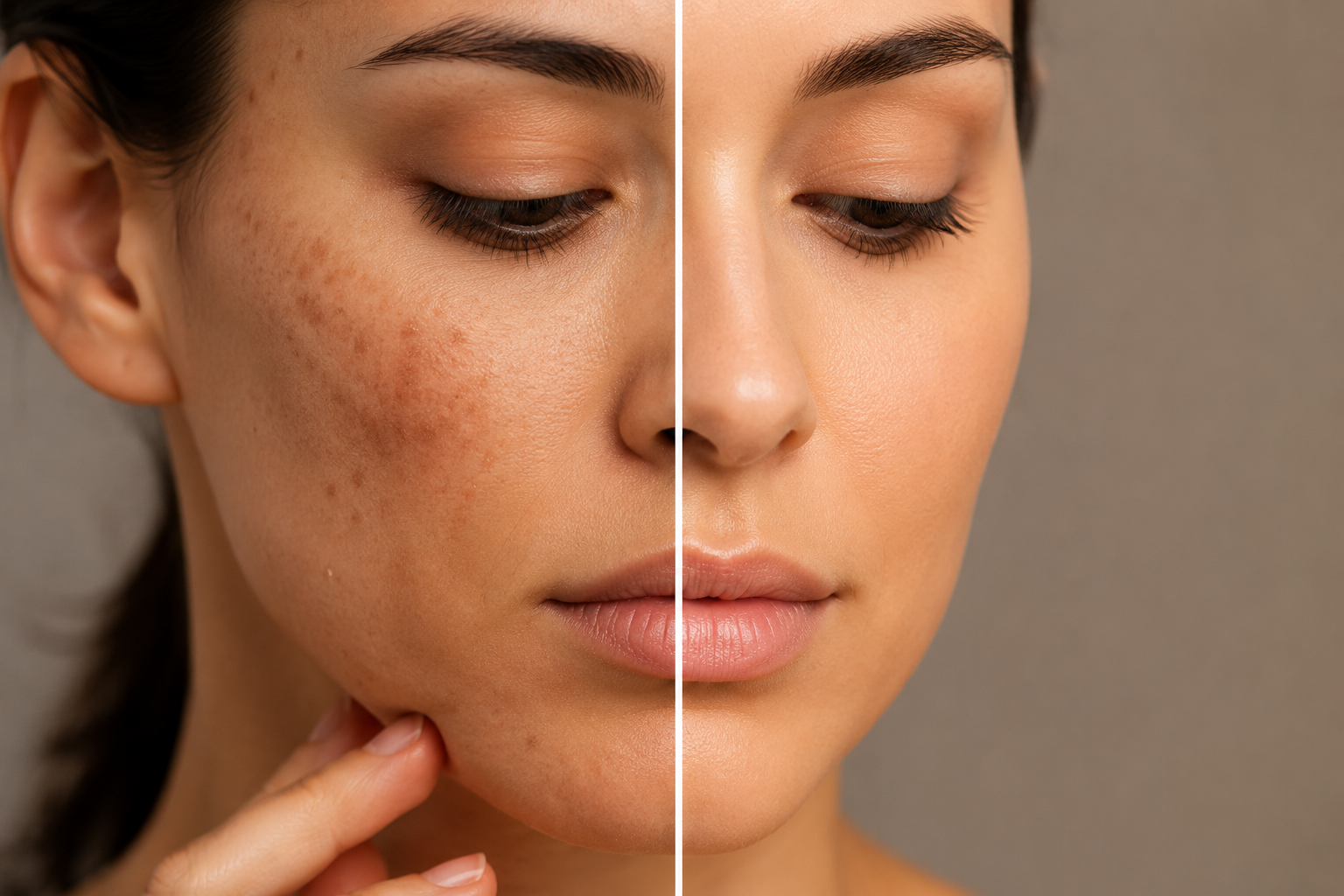
Management depends on the type of dyschromia, the depth of pigmentation, the phototype, and the factors that maintain or worsen it.
It is evaluated whether it is melasma, post-inflammatory hyperpigmentation, solar lentigines, or another form of dyschromia.
Sun exposure, hormonal factors, prior inflammation, or treatments affecting the outcome are evaluated.
A plan is designed that may include topical treatment, peeling, laser, or other therapies depending on the indication.

Treatment selection must be based on the type and depth of pigmentation. An incorrect or aggressive approach can worsen the problem, especially in sensitive phototypes.
Assessment of the color, distribution, duration, and potential causes of the dyschromia.
Treatment planning based on phototype, indication, and skin tolerance.
Photoprotection and care instructions to reduce the likelihood of recurrence.
Improvement is usually gradual and requires consistency, both in treatments and home care.
The outcome depends on the type of dyschromia, the skin's response, and the avoidance of factors that trigger recurrence.
Begin with clinical evaluation
Quick answers before your first visit.
No. Melasma, solar lentigines, and post-inflammatory dyschromias require a different approach.
Improvement is usually gradual and depends on the type of dyschromia and the treatment plan.
Yes. Sun exposure and other factors can trigger a recurrence, which is why photoprotection is essential.
Start with a correct diagnosis and a personalized plan for a more even and luminous skin tone.
Book an Appointment · 210 7105855